
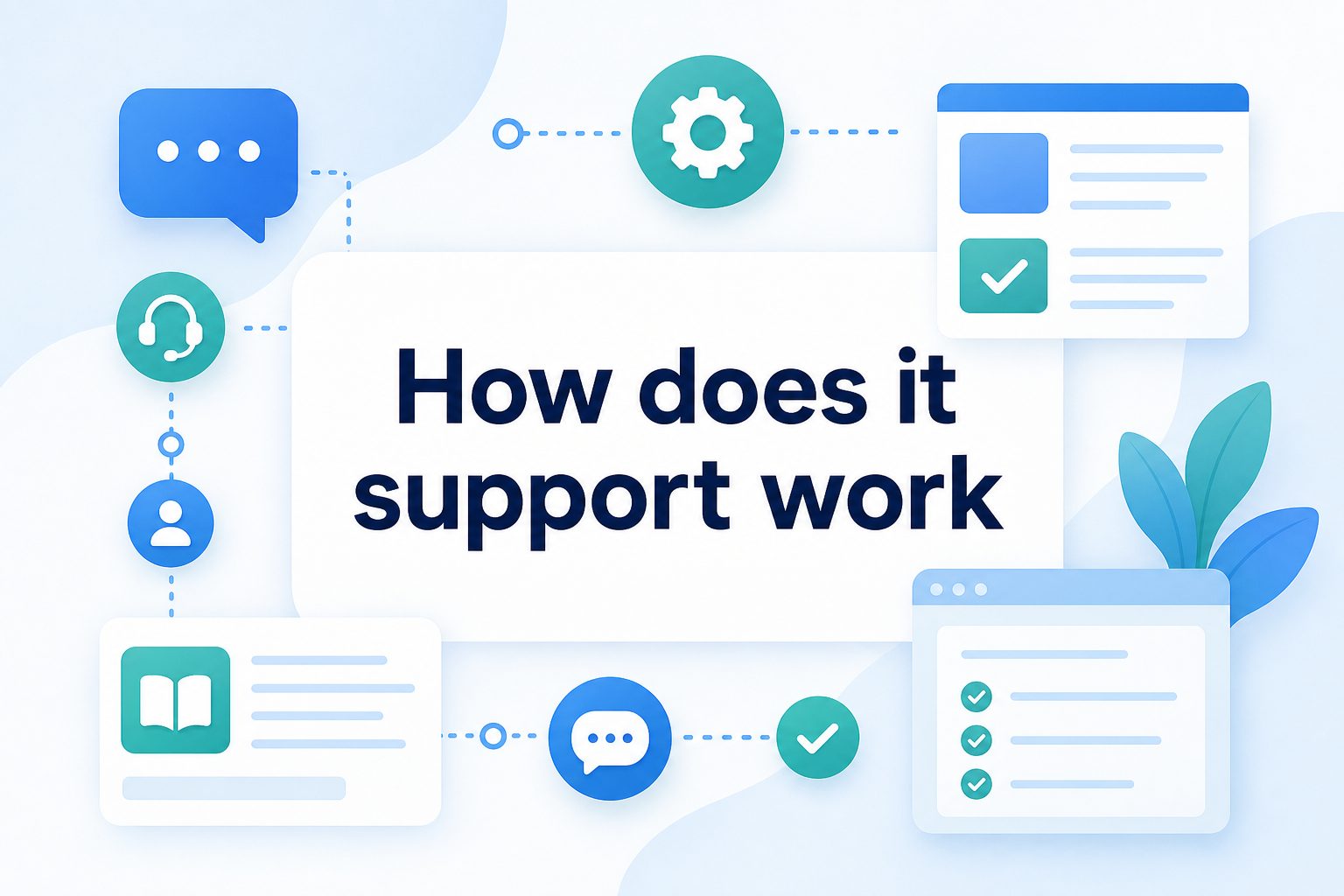
How does it support work is a common question for anyone trying to understand the role of IT support in modern business, education, healthcare, remote work, and everyday digital life. In simple terms, IT support helps people use technology reliably by solving technical problems, maintaining systems, protecting data, and making sure devices, software, and networks keep running.
The value of IT support is easy to notice when something breaks, but its best work often happens quietly in the background. Support teams prevent issues, monitor systems, manage updates, answer user questions, secure accounts, and help organizations avoid costly downtime.
This guide explains what IT support means, how the process works, why it matters, what benefits it offers, and how different support levels handle different problems. You will also learn common mistakes, best practices, practical examples, and answers to frequently asked questions.
IT support is the service that helps users and organizations manage technology problems. It can involve fixing a laptop, restoring account access, troubleshooting email, setting up software, protecting systems from security threats, or helping a company keep its network stable.
Good IT support combines technical knowledge with clear communication. A support person must understand the system, ask the right questions, explain the issue in simple terms, and guide the user toward a practical solution.
IT support can be delivered in person, by phone, through live chat, by remote access, or through a ticketing system. The method depends on the problem, urgency, company size, and type of technology involved.
Most support teams use a structured process. They receive a request, identify the issue, prioritize it, investigate the cause, apply a fix, test the result, and document what happened for future reference.
At its best, IT support does more than repair technology. It helps people work with less friction, reduces repeated problems, improves security habits, and gives organizations confidence that their digital tools are being managed properly.
How Does IT Support Work In Practice?
1. Users Report A Problem
The process usually starts when a user reports that something is not working as expected. This could be a slow computer, a forgotten password, a broken printer, a failed login, or an application error. Clear reporting helps support teams understand the impact and respond faster.
2. The Support Team Logs The Request
Most organizations record support requests in a ticketing system. The ticket includes the user’s details, the problem description, urgency, affected device or software, and any steps already tried. This creates accountability and helps teams track progress until the issue is resolved.
3. The Issue Gets Prioritized
Not every problem has the same urgency. A company-wide network outage is more urgent than a single user needing a software shortcut. Prioritization helps IT support focus on problems that affect business operations, security, customer service, or many users at once.
4. A Technician Investigates The Cause
The technician reviews symptoms, asks follow-up questions, checks logs, tests settings, and compares the issue against known problems. The goal is not only to make the symptom disappear, but to find the real cause so the same issue does not return repeatedly.
5. The Team Applies A Fix
Once the cause is clear, IT support may reset a password, install a patch, replace hardware, change settings, remove malware, restore files, or escalate the issue to a specialist. The fix should match the risk level and be tested before the ticket is closed.
6. The Result Is Confirmed
A support request is not truly complete until the user confirms the problem is solved or the system test shows normal performance. This step prevents premature closures and gives the support team a chance to explain what changed and how to avoid similar issues.
7. The Solution Is Documented
Documentation is a major part of professional IT support. Notes about the cause, fix, affected systems, and user impact help future technicians solve similar issues faster. Over time, this knowledge base improves consistency and reduces repeated troubleshooting work.
Why Does IT Support Matter For Work?
1. It reduces downtime by helping people return to productive work quickly when technology fails.
2. It improves security by managing passwords, updates, access controls, device policies, and suspicious activity.
3. It supports remote and hybrid teams by keeping communication tools, cloud platforms, and devices connected.
4. It protects business continuity by monitoring systems, backing up data, and preparing recovery plans.
5. It improves employee confidence because users know where to get help when technical problems interrupt their tasks.
Key Benefits Of IT Support
- Faster Problem Solving: A trained support team can diagnose common issues quickly because it has tools, experience, documentation, and access rights that ordinary users do not have.
- Better Security: IT support helps prevent data loss and unauthorized access by enforcing updates, managing accounts, reviewing permissions, and responding to threats.
- Higher Productivity: When systems work reliably, employees spend less time fighting technical problems and more time completing meaningful work.
- Lower Long-Term Costs: Preventive maintenance, monitoring, and early troubleshooting often cost less than emergency repairs, lost data, or prolonged downtime.
- Improved User Experience: Support teams make technology easier to use by answering questions, improving setup processes, and removing common points of frustration.
- Clear Accountability: A formal support process makes it easier to track who is handling an issue, what has been tried, and when the problem should be resolved.
What Are Common IT Support Mistakes?
1. Treating Symptoms Instead Of Causes
A quick restart may solve a temporary issue, but it does not always address the underlying problem. Strong IT support looks for patterns, recurring errors, device health, configuration changes, and user impact so teams can prevent the same issue from returning.
2. Ignoring Documentation
When technicians skip documentation, future support becomes slower and less consistent. Good notes help teams understand what happened, which fix worked, and whether the issue is part of a larger trend that needs a permanent solution.
3. Using Too Much Technical Language
Users need clear guidance, not confusing jargon. A support team may understand the technical details, but communication should focus on what happened, what changed, what the user should do next, and how the problem affects their work.
4. Delaying Security Updates
Postponing updates can leave systems exposed to known risks. IT support should balance update timing with business needs, but critical patches, antivirus updates, and access reviews should not be ignored simply because they are inconvenient.
5. Closing Tickets Too Early
Closing a ticket before the user confirms the outcome can create frustration and repeat work. A professional support process includes verification, user communication, and enough follow-up to make sure the fix actually solved the reported problem.
6. Failing To Train Users
Some recurring issues happen because users do not know the safest or most efficient way to use a tool. Basic training on passwords, file storage, phishing, software workflows, and device care can reduce support volume and improve overall performance.
IT support works by combining people, processes, tools, and technical knowledge to keep digital systems reliable. It receives problems, prioritizes them, investigates causes, applies fixes, confirms results, and records solutions for future use.
The most effective IT support is not only reactive. It also prevents issues through monitoring, maintenance, updates, security controls, documentation, and user education.
For individuals and organizations, the real value is practical. Better support means fewer interruptions, safer systems, clearer communication, and more confidence in the technology used every day.
FAQs About How Does IT Support Work
What Does IT Support Actually Do?
IT support helps users solve technology problems and keeps systems running properly. This can include fixing devices, managing accounts, troubleshooting software, securing networks, installing updates, recovering files, and answering technical questions in a clear and practical way.
How Does IT Support Work Remotely?
Remote IT support works through phone, chat, ticketing systems, screen sharing, and secure remote access tools. A technician can guide the user, check settings, install updates, review logs, or fix software problems without being physically present at the location.
Why Is IT Support Important For Businesses?
IT support is important because most businesses depend on technology for communication, sales, records, operations, and customer service. When systems fail, work slows down. Support teams reduce downtime, protect data, improve security, and help employees stay productive.
What Is The Difference Between Help Desk And IT Support?
A help desk is usually the first point of contact for user issues, while IT support can include broader technical work such as infrastructure, security, system administration, and advanced troubleshooting. In smaller organizations, the same team may handle both roles.
When Should A Problem Be Escalated?
A problem should be escalated when the first support level cannot solve it, when it affects many users, when security may be involved, or when specialized access is required. Escalation helps the issue reach someone with deeper expertise or authority.
How Can Users Help IT Support Work Faster?
Users can help by giving clear details about the problem, including error messages, affected devices, recent changes, and when the issue started. It also helps to explain the business impact, follow instructions carefully, and confirm whether the solution worked.